Winter conditions can be unpredictable, however most of the techniques required in cold environments are common sense.
Rules of thumb
- Keep speed as low as practically possible
- Increase your distance between cars
- Slow right down for corners, junctions and any other hazards
- If travelling long distances, be aware of changing conditions
- along your route
- Get all of your braking done on the straights, never brake during a corner if it can be avoided
- Be prepared for understeer and oversteer, and know how to correct when necessary
- Be prepared to use ABS or avoidance braking techniques
- Top up washer fluids and antifreeze
- Select 'snow' mode if available on automatic transmissions, or if an advanced electronic stability control system is fitted
- If you have to climb a slippery hill, ensure the top is clear before starting the ascent
- Use a good snow forecast app and be prepared
Many websites have published information which deal with the above issues well, so if you need more of the basics, try a Google search. This article discusses some more advanced safety-based techniques for making progress in winter driving conditions.
Are you a 4x4 owner? Read our dedicated article specially for you
Introduction to winter driving techniques
Making the most of available traction is key to winter driving
Making the most of available traction is key to winter driving. Loss of traction can lead to wheelspin under acceleration, wheel-lock under braking and sideways sliding while cornering. There are many automatic stability control systems which can control these actions to a limited extent, however there is no substitute for the correct technique. Investing in a vehicle with ABS is the single most effective method of increasing your safety in slippery conditions, and luckily most modern cars have this as standard. Traction control systems can control wheelspin, but bear in mind that these technologies are reactive, which means you will already be in a certain amount of trouble before they start to operate. It's much better to avoid the problems to start with, and this is where technique comes in.
Top tips for driving on snow and ice
Pull away and accelerate gently and progressively
In slippery conditions such as snow and ice, aggressive acceleration is likely to break traction at the driven wheels. The resulting wheelspin can lead to loss of steering control in a front wheel drive (FWD) car, or an oversteer slide in a rear wheel drive (RWD). Both of these situations will prevent you from going in the direction you want and can be difficult to recover from.
Quickly recover from wheelspin
If you do notice wheelspin or the traction control systems fighting for grip, fight the urge to floor the throttle, and instead back off the gas and then re-apply smoothly. keep the engine speed (rpm) as low as possible Keep a constant low throttle in order to maximise grip. Most diesel engines will cruise along happily in low gears without using any throttle as all.
Reduce torque at the wheels
Change up sooner rather than later, pull away in second gear if possible, and use the highest practical gear at all times. Higher gears reduce torque at the driven wheels and therefore lower the chances of wheelspin - especially important if you need to climb a slippery hill. Keep gear changes as smooth as possible, as it will be easy to spin the wheels in most gears when conditions are really challenging. If you drive an auto, make use of any winter settings at your disposal.
Avoid sudden driver inputs
These can include steering, braking, acceleration or gear changes. You only have a finite level of grip available so try not to overload your tyres unnecessarily. Driving smoothly will conserve grip, and make you safer on the roads. Brake soon, and gently If you do not have ABS fitted, be prepared to ease off the brakes when necessary to steer more effectively. Locked front wheels cannot steer!
Make the best use of ABS
If you do have ABS, you'll be able to tell it has triggered by feeling a pulsing sensation through the brake pedal. If this has occurred do not 'pump' the brakes, rather keep a firm pressure on the pedal for maximum effectiveness. ABS is designed to help you steer as you're slowing down so use this to your advantage and avoid obstacles.
Prevention is better than cure
Even if you do have ABS or traction control systems fitted, don't get into the habit of using the technology routinely, you'll be able to slow down in a shorter distance if you use threshold braking techniques.
Use a trailing throttle through corners
Easing off the gas before you enter a corner will transfer some weight to the front wheels, helping to increase traction where it's needed.
Carry speed up slopes
Demands on your tyres increase dramatically up hills. You need to carry a suitable amount of momentum to make it to the top. As you do approach the brow of the hill, ease off the throttle and come to a gentle halt.
Control speed down slopes
Keep your speed down from the top of a hill, don't expect to be able to scrub off much speed on the way down. Think well ahead and prepare for the next hazard.
Observation and anticipation
No matter how skillful you are, there's no substitute for thinking ahead. If you're in familiar areas, anticipate what's coming up, and if you're not in a place you know well, then expect hazards around every corner.
Learn how a car behaves at the limit of friction
This is a sensible idea for any driver - go to a skid pan or play around on a track. Spin a lot, learn how to control slides, this is such a helpful transferable skill which may save your life one day.
Recovering from slides in very slippery conditions
If you're an experienced driver you may be able to use other techniques to help recover from these situations, and these are covered in the dedicated oversteer and understeer articles.
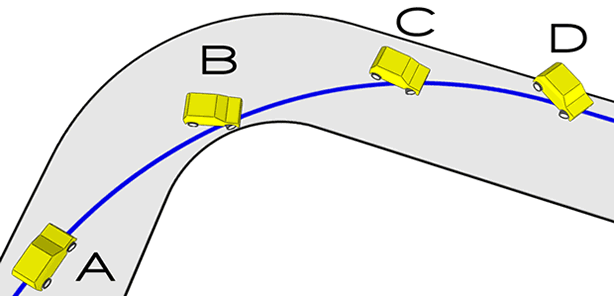
Understeer is when you turn the steering wheel but find that the car has a tendency to continue straight ahead (Figure 1). Oversteer is when the car tries to spin round due to a lack of traction at the rear (Figure 2). Both situations are more likely on winter roads but can be helped using the same techniques (which should make things easier to remember).


Resist the urge to stamp on the brakes during understeer or oversteer, as this can make things much worse
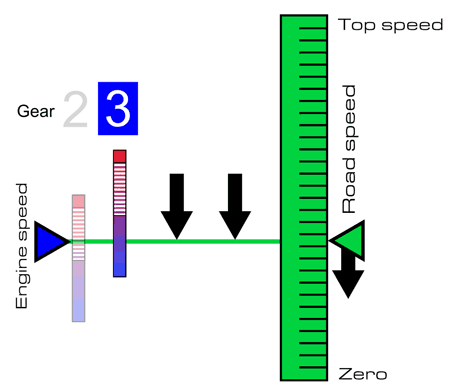
If you do find yourself in an understeer or oversteer situation on a very slippery road try not stamp on the brakes in panic as this can make things worse. Instead, smoothly ease off the throttle and keep the steering pointing in the direction of intended travel. Rapid or harsh driver inputs of any kind should be avoided. You also need to try and get the driven wheels turning at road speed to regain maximum traction. Press the clutch or flick an automatic into neutral to remove the influence of the engine and help get the wheels rotating at a more natural rate. With luck, this will create vital grip to avoid obstacles and allow you to progressively apply the brakes. When traction is regained, be prepared to take off the steering lock quickly in order to prevent another slide in the opposite direction. Now apply the brakes smoothly and work out what to do next.
Cars with electronic stability controls fitted

Modern traction control systems will make the best use of available grip
Most modern cars are fitted with electronic stability control systems which can be very helpful in slippery conditions. These technologies all work in roughly the same way and have two main methods of intervention:
- Reducing throttle
- Applying brake force to individual wheels
The quality of these systems do vary, but most can react very quickly and apply more precise corrections than most drivers can manage. Once stability control is activated, all the driver really needs to do is keep the steering pointing in the intended direction of travel and apply the brake when needed. The only time you may want to think about turning these systems off is when the car is struggling to travel in deep snow, or as a last ditch attempt to pull away in extremely slippery conditions.
Dedicated article on stability control systems
Tackling slippery hills
Ascent
Climbing a hill successfully requires the right balance of traction and momentum. If you lack traction, you'll need more momentum, but momentum creates it's own difficulties - it's a balance of finesse and bravery. To climb a slippery hill, you need to carry speed - build it up at the base of the hill as accelerating mid way is rarely any use. Before you attempt a climb, it's very sensible to have somebody at the top of the hill to signal when the coast is clear, and to warn approaching cars to stop. Reverse to gain sufficient run up, and once on the hill keep a steady throttle - resist the urge to accelerate mid-way as this will likely kill your traction and cause wheel spin. Ease off the throttle towards the top of the hill. Probably best to have a go slowly first, then build up speed if required. If you do fail to make it to the top, quickly select reverse, keep off the gas and steer your way to the bottom for another go with more gusto.
Descent
Again, it makes sense to position somebody at the base of the hill to warn other traffic. Once you're on the hill, it can be impossible to stop and you'll need some run-off room too. Select first gear, ease over the crest then keep your feet off the throttle and control your speed gently with brakes if required. Engine braking is your friend as it resists wheel lock. If it's very very slippery, even first gear can provide too much braking and the car will start sliding forward - if this is the case, you can try momentarily accelerating, then easing off the gas to try and regain steering control, but this is a fairly advanced technique which requires practise.
Stopping distances in varying winter conditions
Finally, we'll take a look at stopping distances to emphasise how important it is to slow down and brake early. Graph 1 shows the dramatic difference in braking distance when on black ice compared to normal tarmac conditions with the same tyre, it's well worth bearing this in mind in the winter an adjust your driving style accordingly.

Friction levels in different winter conditions
Graph 2 below summarises the levels of friction available in different winter conditions - the worst conditions observed provided only approximately a quarter of the grip of dry asphalt.

Winter tyres
Depending on the severity of the conditions, it may be worth considering specialist winter tyres. The difference they make is remarkable. These vary from a Mud and Snow (M&S) rating through to studded tyres for icy roads. Surprisingly, with the correct tyres fitted, driving in quite severe conditions can become simple - you just have to pay a visit to Finland or other northern countries in the winter for a demonstration. Note that studs aren't legal in some countries due to the damage they can do to road surfaces. Manufacturers of winter tyres use several methods to increase friction and help maximize control. Firstly, the rubber compounds are usually softer which allows optimum friction to be reached at lower temperatures (this however does make them wear faster when used in warmer conditions on dry tarmac). The diagram below shows the effect of different rubber compounds on the stopping distances in different temperatures. Secondly, winter tyres can have small 'sipes' which are formed into the rubber within a tread block - these provide grippy edges which are especially useful when driving in snow. Thirdly, the tread tends to be wider and deeper which provides more bite when driving in the snow or on ice.


Winter tyres usually also have an aggressive block-like tread pattern which can help to dig into the snow and provide traction (also useful in muddy conditions). Finally, small studs can be fitted to the tyre and these provide a great deal of benefit when driving in icy conditions, although in some countries these are only permitted in the coldest months as they damage road surfaces. Studded tyres can also increase your braking distance when on a clear dry road.
Winter tyre performance
WHATCAR? magazine tested a selection of winter tyres braking from 25mph to a complete stop in a VW Golf in 2012. The results, which are dramatic, are shown below.
Driving in snow

Driving on ice

Snow chains
If you're driving in deeper snow, it might be worth considering using snow chains, or at least having some in stored in your car. These are fitted to the driven wheels and can provide dramatic increases in traction. If you do choose to fit snow chains, ensure the manufacturer's instructions are followed carefully or damage to your car could result.